At The Zoo: Birds & Other Celebrities

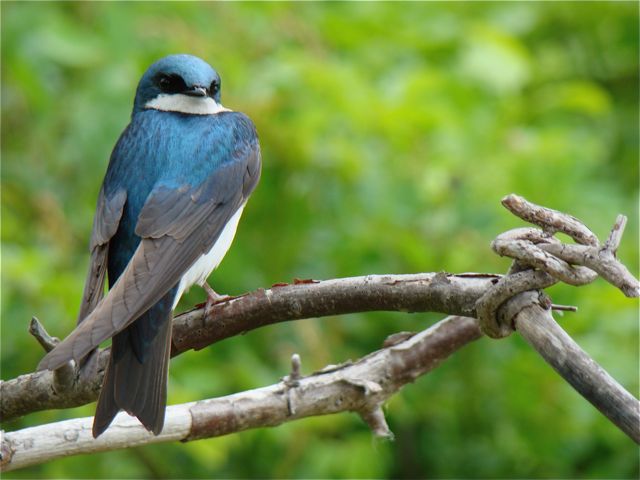
Central Park Zoo Celebrity (Beak & Feathers): Photo Credit-Central Park Zoo
“Have you ever held a duck before? Do you know how?” asked Tony B., the Animal Supervisor at the Central Park Zoo, early one Saturday morning. As I shook my head “no,” Tony thrust a duck at me and instructed, “Reach around her unfurled wings with both hands. Yes, you’ve got it! Lightly, but firmly. It’s actually better than grabbing her whole body. You’ll immobilize and calm her this way.”
Still, even while I awkwardly grasped the base of each wing in the avian equivalent of a half nelson, I could feel the duck’s heart pounding. Her grayish brown pinions were warm and slightly greasy.
“Just sit tight while I help my crew round up the remaining birds, then I’ll come back for her,” Tony said.
He smiled reassuringly. Dressed in khaki shorts and a Central Park Zoo shirt, Tony—a solid, 53-year old with a crew cut, moustache, and goatee—radiated a gentle authority and expertise. I relaxed a little, and so did my duck.
Tony and I were standing together on the muddy banks of a little stream in the “Zoo School,” a small section of the Central Park Zoo devoted to children. At the crest of a large rocky outcrop of the Manhattan schist that punctuates Central Park’s topography, the “Zoo School” extends just beyond the landmark Delacorte Clock, with its rotating platter of animal statutes that toll the hours.
Unobtrusive black netting, draped over two tall poles, encloses the “school.” The resulting canopy acts as a soft, benevolent cage and keeps the exhibit’s flying denizens—its marabou storks; its Major Mitchell cockatoos (which, on the morning I visited, had succeeded in gnawing large chunks from a nearby wooden pavilion); and its peacocks with their haunting, inhuman cries—from escaping into the surrounding park’s landscaped groves and meadows.
Founded in 1864, The Central Park Zoo, one of the country’s most famous, is currently administered by the Wildlife Conservation Society, based in the Bronx. The Society also manages the Bronx Zoo, the New York Aquarium in Queens, the Prospect Park Zoo in Brooklyn, and the Queens Zoo. In 2006, over 1,030,741 people visited the Central Park Zoo. That means approximately 2,824 people per day fans out over its five acres, a very small but immensely valuable parcel of Manhattan real-estate.
Yet, its densely plotted public paths and many out buildings, its underground service passages and numerous exhibits (all of which Tony navigated with quiet pride as he pointed out colleagues, plants, or animals of particular interest) made the zoo seem bigger and more intricate than any mere map measurement would suggest.
In the midst of the zoo’s continual crush of visitors, Tony’s role as Animal Supervisor involves managing twenty-three keepers (with amusing job titles such as “Tropic #1,” “Animal Base,” and “Penguin #1”) and additional “animal” interns. Tony’s team provides all the daily husbandry and food for the zoo’s many permanent residents.
Indeed, as of its 2006 census, the Central Park Zoo housed an extraordinary 1,790 animals, of which 752 were mammals; 259 were birds; and 779 were reptiles and amphibians. (And this count didn’t include the myriad, black leaf-cutter ants currently tending their underground fungus farms in a service building while workmen repair their glass-fronted hive in the Tropical Rainforest exhibit. “Those ants can bite pretty hard. They hurt. You have to be careful when you deal with them,” Tony had warned.)
Still clutching my duck, I watched as Heather, Bob, and Gretchen—members of the zoo’s staff—gently shooed a dozen or so birds towards Tony and Temisha, another keeper, who were now wielding large nets. As Tony had explained earlier, the zoo had decided to drain the artificial ponds and streams in the “Zoo School” in order to install a new filtration system. The mandarin and golden-eyed ducks would handle the renovations with aplomb, apparently.
However, the keepers were very concerned about the mergansers and other diving species whose underwater habits might lead them to get sucked into the drains as the ponds subsided. So, before the aquatic engineers emptied the waterways and installed new filters, Tony and his keepers had worked out a plan to sequester—as untraumatically as possible—the ducks at high risk.
Earlier, in the Tropical Rain Forest building, Tony and I had chatted about his job while watching a brilliant confusion of tropical birds—the aviary’s reclusive West African long-tailed hornbill; an emerald starling with an iridescent green coat; a white-fronted Amazon parrot; several blue-crowned motmots; a red bird-of-paradise who sometimes masturbates on keepers’ arms; a fawn-breasted bower bird, and a formidable-looking northern keel-bill toucan—descend upon trays of seeds and fruit.
Tony admitted that being Animal Supervisor felt more like play than work. As he explained: “I’ve always loved animals, though I don’t have as much direct animal contact now that I’m a manager. I also love living in such a big city while still being able to disappear into Central Park and the zoo. They’re both special, semi-secret environments most New Yorkers don’t experience often or even know much about. My job is still fun, too, and I’ve worked in the city’s zoo system for thirty-one years. Every day, I learn something new about animals. I’m lucky, because people who love animals are great, so I’ve got amazing co-workers.”
With sixteen diving ducks netted and transferred to a large holding pen, Tony and his team paused to catch their breath and laugh about some of their more elusive quarry, which had hidden at the bottom of the largest pond.
“We’ll get the rest of them tomorrow,” Tony advised, “Let’s take a break now.”
I asked him whether it was hard, as an animal person, to deal with so many human visitors each day. Did they annoy or tire him?
“You know, I was worried when I first transferred here from the Bronx Zoo in 1988. I thought maybe the Manhattan visitors might be rude or pushy. Actually, though, you get some educated visitors here and lots of foreign tourists. They tend to be pretty interested and ask smart questions. Of course, because of our location, a lot of celebrities stop by, too.”
“Really,” I replied with curiosity, “Who?”
Tony thought for a moment.
“Well, let’s see. There was Heather Locklear, Matt Dillon, Jacqueline Onassis, Brooke Astor, Candice Bergen and Louis Malle… you know, before he died. Barbara Walters once came to stage a TV interview here… in a fur coat. Needless to say, given all the conservationists on staff, her assistant had to run out and buy her something more appropriate.”
Tony chuckled quietly.
“I gave Céline Dion, her husband, and her sister- and brother-in-law a tour once. Russell Crowe came with his wife and kid. He was totally into his son; clearly a doting dad and a stunning, beautiful man.”
Tony looked pensive and then remembered something.
“Mia Farrow and Woody Allen used to visit all the time with their children. Then, all of a sudden, Woody stopped coming. I knew something was up long before the newspapers did.”
As Tony and I strolled down the winding path that led back to the rest of the zoo, his mood lightened again. A mischievous grin spread over his face.
“People often hire the zoo for parties and special events. The Republican National Committee rented us out during the Republican convention in New York City. So, we put up a sign in the Penguins and Puffins Exhibit about our gay penguins. (We’ve had several famous pairs of same-sex chinstraps and gentoos, and one couple even hatched and raised a baby penguin.) When some of the Republican party-goers discovered our sign, they got angry and stormed out of the zoo.”
Tony clearly relishes the human animal as much as he does the more standard, zoological variety, I decided. We passed underneath the Delacorte Clock just as it struck 10:00 a.m., and the zoo opened its gates to the public. Tony’s walkie-talkie crackled to life. He got caught up in a conversation… seemingly about polar bears. I fell back, politely.
A gaggle of families with strollers surged through the zoo’s main entrance. Opposite, inside their glass-walled pool, I watched two sea lions swirl and zoom through the water like bewhiskered mermaids. Running up to the edge of the surrounding moat, several children shouted happily. A flock of pigeons scattered into the humid air.
NB: Some names of people mentioned in this profile have been changed.
Share This by Clicking Here:



 WordRustler