
What to do with such knowledge as photographs bring of faraway suffering? People are often unable to take in the sufferings of those close to them. […] For all the voyeuristic lure—and the possible satisfaction of knowing, This is not happneing to me, I’m not ill, I’m not dying, I’m not trapped in a war—it seems normal for people to fend off thinking about the ordeals of others, even others with whom it would be easy to identify. […]
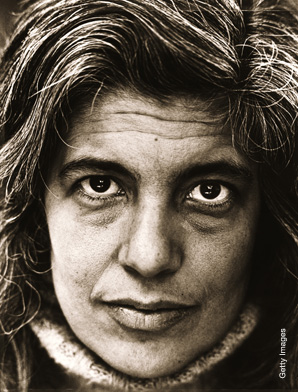
Susan Sontag
People can turn off not just because a steady diet of images of violence has made them indifferent but because they are afraid. As everyone has observed, there is a mounting level of acceptable violence and sadism in mass culture: fims, television, comics, computer games. Imagery that would have had an audience cringing and recoiling in disgust forty years ago is watched without so much as a blink by every teenager in the multiplex. Indeed, mayhem is entertaining rather than shocking to many people in most modern cultures. […]
Compassion is an unstable emotion. It needs to be translated into action, or it withers. [Italics mine.] The question is what to do with the feelings that have been aroused, the knowledge that has been communicated. If one feels that there is nothing “we” can do—but who is that “we”?—and nothing “they can do either—and who are “they”?—then one starts to get bored, cynical, apathetic. […]
The imaginary proximity to the suffering inflicted on others that is granted by images suggests a link between the far-away sufferers—seen close-up on the television screen—and the privileged viewer that is simply untrue, that is yet one more mystification of our real relations to power. [Italics mine.]
So far as we feel sympathy, we feel we are not accomplices to what caused the suffering. Our sympathy proclaims our innocence as well as our impotence. To that extent, it can be (for all our good intentions) an impertinent—if not an inappropriate—response. To set aside the sympathy we extend to others beset by war and murderous politics for a reflection on how our privileges are located on the same map as their suffering, and may—in ways we might prefer not to imagine—be linked to their suffering, as the wealth of some may imply the destitution of others, is a task for which the painful, stirring images supply only an initial spark.




 WordRustler