A Writer’s Power


“…in truth, we have no gift to set a statesman right…”

On Being Asked for a War Poem
W.B. Yeats

This verse from Yeats always sets my head ringing.  My reactions to his wonderful poem are complex, however.  First, Yeats’ own work engages revolution and reaction more explicitly than any other 20th century poet in English.  Isn’t he being a bit sneaky here, at best, avoiding praise of England’s cause in World War I while reserving his right to sing Irish independence?  Maybe.  But Yeats was also a poet of dichotomies and was wonderfully unafraid to contradict himself.

Still, while eschewing propaganda, can’t a writer serve as a witness or moral imaginer of his time?  Or, if he does, must he necessarily stick his head into the yoke of partisan politics?  My question assumes that language refers to real things, not just itself, and that speaking or writing are acts with consequences in the world, not just in academe.

I might reformulate (prosaically, alas) the Yeatsian snippet.  I might hazard that a writer’s power—unlike a prime minister’s, pope’s or plutocrat’s—lies in his ability to describe, rather than prescribe.  More precisely, perhaps we are strongest when we feel, see, and think as ferociously in words as possible, then dare to show what we’ve written to someone else—even if that “someone” is only ourselves.
Posted in Opinion, Prose | Tagged , , , , , | Leave a comment

Englishing de la Rochefoucauld (The Art of Conversation)


Maxim 139.

One of the reasons why you find so few people who can carry on a rational and pleasing conversation is that there is hardly anyone who doesn’t think more about what he wants to say than about answering thoughtfully what has already been said to him.

The smartest and the most polite satisfy themselves by wearing what only appears to be an attentive face, whereas you can see in their eyes and minds that they’ve wandered far from what you’ve said, and that they feel an impatience to return to what they want to express, themselves.

Instead, we should consider that seeking so obviously to please ourselves is a foolish way to try and please or persuade others.  The art of listening well and responding with intelligence is one of the greatest perfections of conversation.

from Maxims of La Rocefoucauld
Editions Garnier

Englishing de la Rochefoucauld (The Art of Conversation)

Posted in Prose, Quotations, Translation | Tagged , , , , | Leave a comment

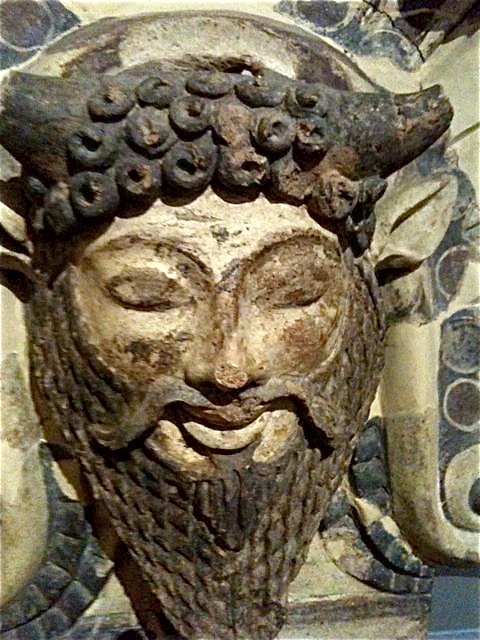
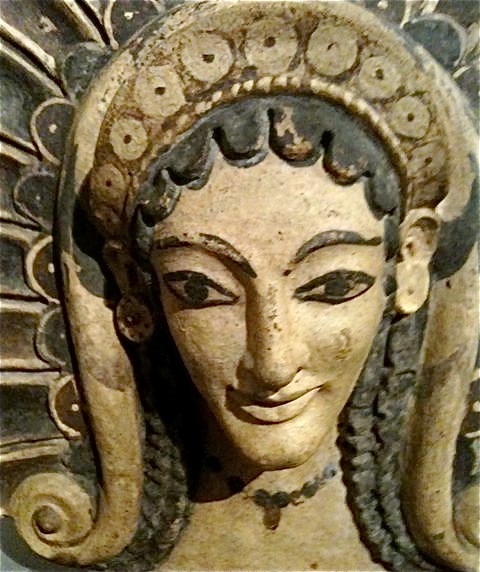
Terra Cotta Troika


Etruscan Man: Horned God

Etruscan Woman: Mona Lisa Smile

Etruscan Satyr: Tongue Out

Posted in Photos | Tagged , , , , | Leave a comment

La Muerta (El Yucatan)


Afternoon Wreath

La Muerta (El Yucatan)

Posted in Photos | Tagged , , , , | Leave a comment

Englishing de la Rochefoucauld (Laziness)


Maxim 54.

Of all our passions, laziness is the most unacknowledged.  It is both the most eager and the most malignant motive of all, though its violence cannot be felt and the damage it causes is profoundly hidden.  If we carefully consider its power, however, we will be forced to admit that, in all our endeavours, indolence reveals itself to be the master of our feelings, our concerns and our pleasures.  It is the barnacle which can slow the sleekest ship, the doldrum more dangerous to great undertakings than the shallowest reef or the largest storm.  The respite offered by laziness is a secret charm of the mind that can suddenly stop the most ardent pursuits and betray the most deeply-sworn vows.  To give, in the end, the truest idea of this passion, it might be said that laziness inspires a vision of bliss in the soul, consoling it for all its losses and furnishing all the goods it has never obtained.

from Maxims of La Rocefoucauld
Editions Garnier

Englishing de la Rochefoucauld (Laziness)

Posted in Musings, Prose, Quotations, Translation | Tagged , , , , | 1 Comment