Engraving of the poet George Herbert (from his collection, The Temple)
PRAYER (I)
PRAYER the Churches’ banquet, Angels’ age,
God’s breath in man returning to his birth,
The soul in paraphrase, heart in pilgrimage,
The Christian plummet sounding heav’n and earth;
Engine against th’ Almightie, sinner’s towre,
Reversed thunder, Christ-side-piercing spear,
The six daies world-transposing in an houre,
A kinde of tune, which all things heare and fear;
Softnesse, and peace, and joy, and love, and blisse,
Exalted Manna, gladnesse of the best,
Heaven in ordinarie, man well drest,
The milkie way, the bird of Paradise,
Church-bells beyond the stars heard, the soul’s bloud,
The land of spices, something understood.
TO HEAR MALCOLM FARLEY READ GEORGE HERBET’S SONNET, PRAYER (I), CLICK ON THE AUDIO ICON BELOW.
Taxes cuts for the rich, two wars (paid for by selling U.S. debt to China and others), and a drug-company boondoggle for a bloated Medicare prescription drug plan—all voted for by a Republican Congress and signed into law by a Republican president, W.—are one big reason for our current federal fiscal mess.
The lack of universal health care and any control over runaway health-care costs is another. Most current opponents of health-care reform propose no solutions to runaway healthcare costs except cutting benefits for the middle class, the working class, and the poor. The hidden agenda? Reduce pressure on the rich to help fund healthcare for all Americans.
2) The Social Contract and Why The Rich Owe Taxes, Too
Warren’s point is excellent. No one gets rich all on her own in any society.
All of us pay for the roads, bridges, tunnels, airports, railroads, ports and canals, and publicly-subsidized monopoly utilities (such as gas, water, the Internet, telephone system, and electricity) and the postal service that enable a business woman to transport goods to market and receive raw materials.
An enterpreneur depends upon the skills and education of workers whom we all pay to educate. We all pay for the military, police, and fire services and legal system (judges, prosecuters, etc.) that protect a business woman’s physical and intellectual property.
So-called “burdensome regulations”—that we all pay to devise, administer, and enforce—ensure (sort of) that we have clean water to drink, clean air to breathe, clean soil to till and safe food to eat.
When you understand these facts, it’s much clearer that the rich—disproportionate beneficiaries of our collective wealth—have a moral duty to pay at least as much as the rest of us in taxes.
I’d argue, they owe more than the rest of us. Plain and simple Yankee fairness demands progressive taxation. If you get more, you should give more back.
All this is part of any just and reasonable social contract.
The red “class warfare” flag—the one that opponents of restoring a fair share of taxes on the wealthy wave about like a matador at a corrida—is a trick, designed to take your eyes off the truth.
Don’t run after it like an enraged bull. Stop, think, and investigate the facts and query the morality of these highly self-interested (and selfish) claims.
See the jet streaking across Manhattan’s melancholia?
Doesn’t it spice the end-of-day sky
with a pinch of fear? Who’s behind or inside
that silver bullet? Picture, instead, a giant magic marker
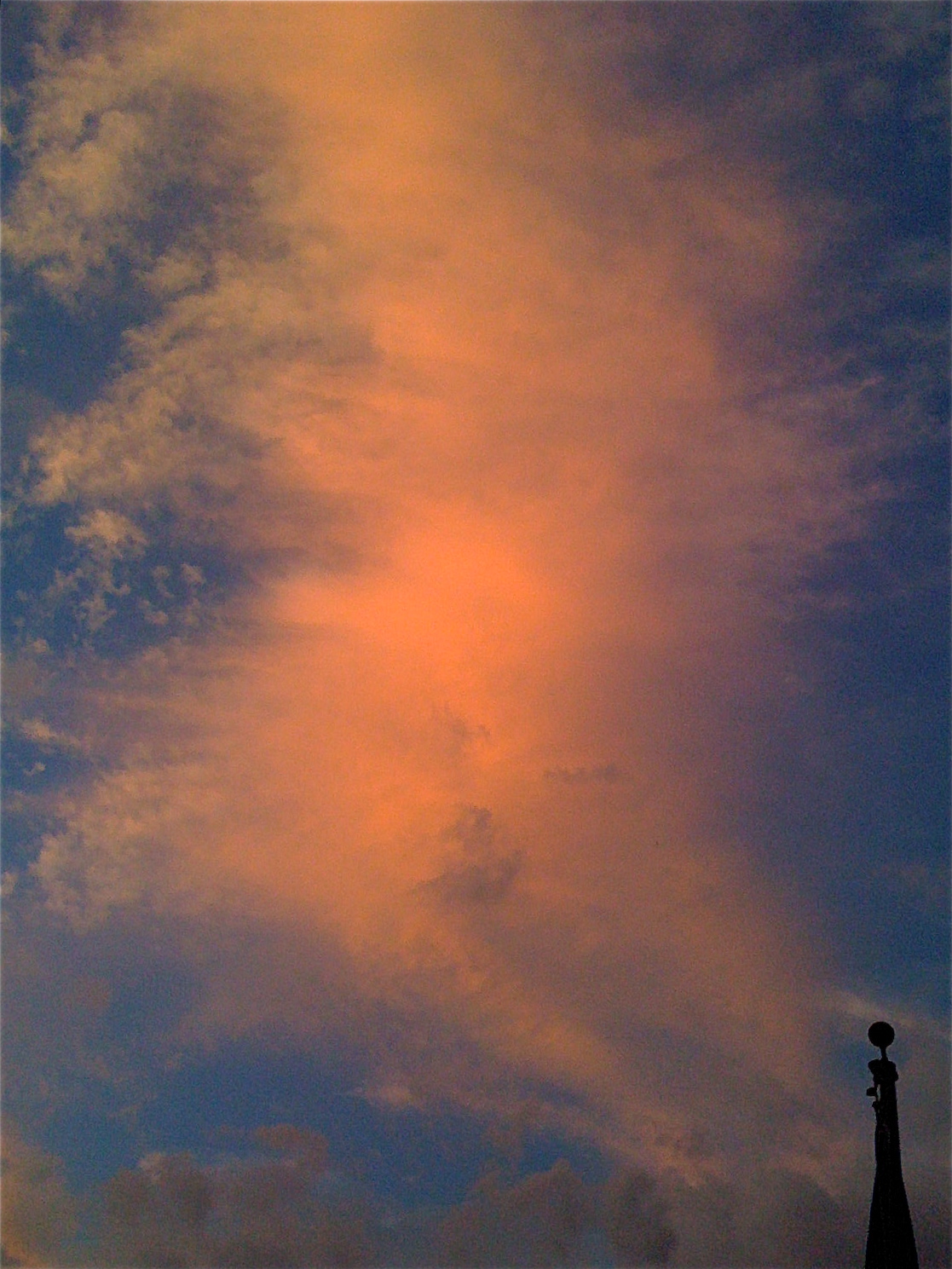
inscribing a vapor of coral and peach
the setting sun ignites. The plane disappears.
Its smoky trail frays and fades. You
notice a tough-looking guy who stares at it, just like you.
He looks haunted, jittery. So, stop pretending
everything is normal now. If, like a child,
you trace the ruins of that turbulence with your finger—
the severed thunderheads and blood-red clots
of cloud; the horizon’s fiery, fanatical eye—it’s okay.
Cry openly, for no clear reason, in the middle of a crowd.
To hear Malcolm Farley read his poem, “Everything Is Normal Now,” click on the audio icon below.



 WordRustler