
This slideshow requires JavaScript.
-
Join 15 other subscribers
Seek & Ye Shall Find
-
Still Hot From The Fry Pan
Ut Pictura Poesis
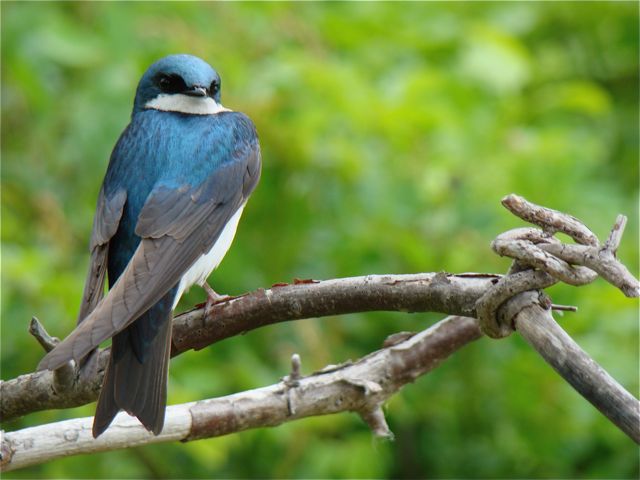
Bird, Jamaica Bay
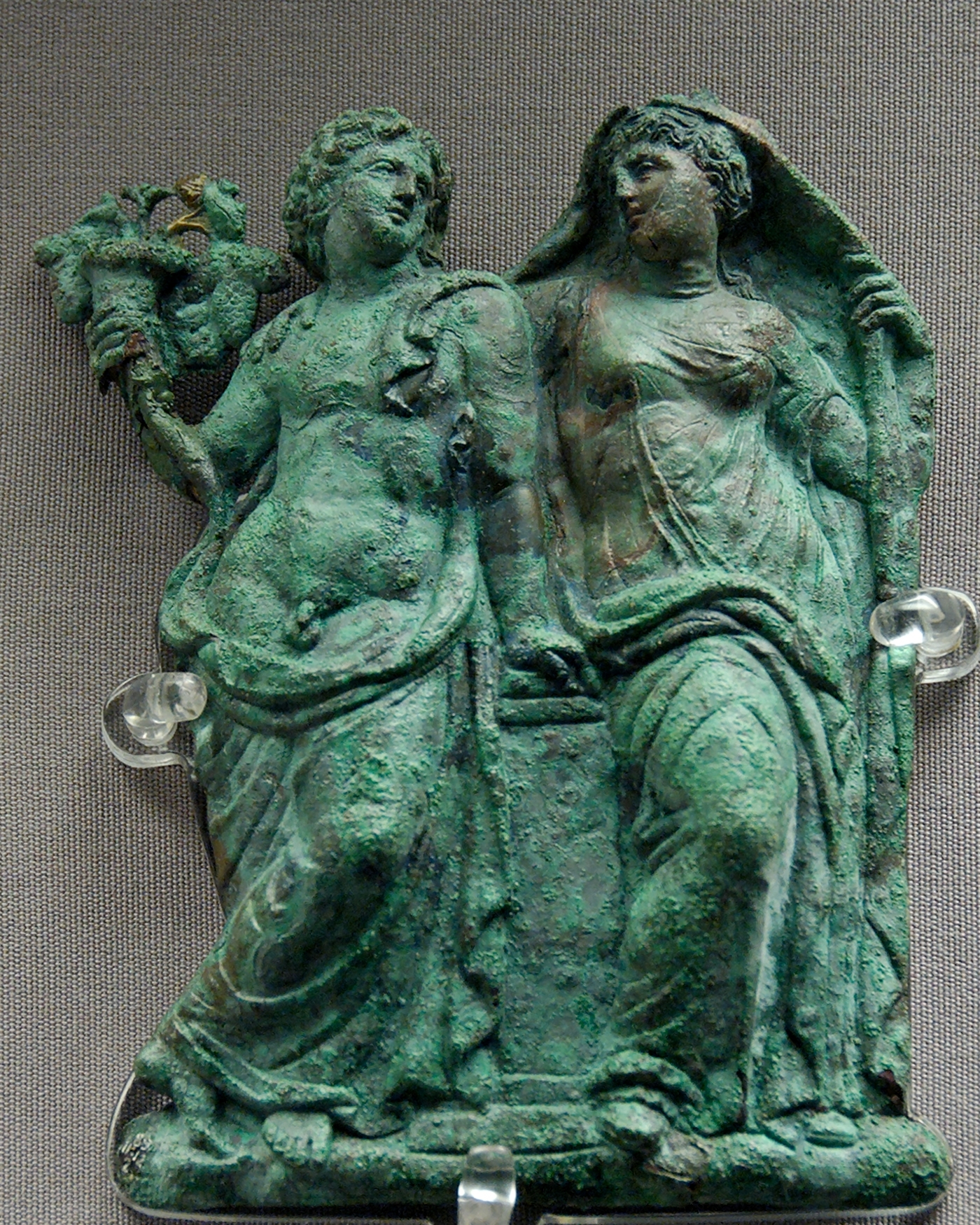
Dionysos & Ariadne (Dionysos (left) wearing a wreath and a cornucopia with Ariadne (right) holding back her veil. Bronze repoussé relief from a hydria, ca. 325–300 BC. From Chalke, near Rhodes. (Photo Credit Wikipedia Commons)
Adriane Speaks Out on Access Olympus
I don’t regret the sword
or my paranormal ball of yarn. They
were the least of
my gifts to him. Not that he
got my astounding primordial clout.
Like a magpie’s eye,
his always sought sparkle.
He wasn’t quite as sharp
as advertised.
My bull-headed half-
brother was a sweetie-pie, too,
not the brute T. claimed later,
in his Athenian McMansion of porphyry
and flat-screen TV’s.
Men crave adoration. In fact, the tabloids
told it wrong. I left him
on Naxos, not vice versa. Why
would I settle
for a mortal arriviste, when
wine-lipped Dionysios crowned me Queen?
I spurned that, too. Crete, Delos,
Cyprus… they began to bow down
the very instant
I rejected all other claims. True
divinity means
taking the high road alone. T. couldn’t punch
his way through a wet paper bag
without a woman’s help. Stupid
Hippolyta. She
had no clue he’d hog the credit
for her Amazonian cojones.
Still, I urged Mount O.
to kick T. upstairs…
to the Heroes’ Hall of Fame.
“God, let’s avoid the otherwise inevitable scene!”
we all agreed.
See, there he is now—pinned
to Night’s black
baggy runway gown—
his stars twinkling like teensy tacky
rhinestones.
*Click on the audio icon below to hear Malcolm Farley read his poem “Ariadne Speaks Out on Access Olympus.”

Lincoln Memorial (Photo Credit: Wikipedia Commons)
We visited Washington D.C. on Columbus Day weekend for what seemed like the last exhalation of “summer’s honeyed breath.” It was balmy enough to eat outside each night. On Sunday afternoon, we rented bikes from the city’s new “rent-a-bike” system (another French idea like L’Enfant’s design of the city, itself) and had a blast biking over the entire mall in 3 hours. It was a tour that would have taken us a whole day on foot and would have been hell by car or bus, given the traffic snarls and the negligent street signage.
Zooming along the Potomac in the dappled sunshine felt almost criminally pleasurable.
Aside from our time at the Vietnam War Memorial, the most moving moment for me was my walk inside the Lincoln Memorial. I’d only seen it from the outside as a kid 35 years ago.
I’d forgotten that Lincoln’s entire Second Inaugural Address is carved onto the right-hand inside wall (as you face Lincoln’s statue).
Lincoln’s speech is still astounding nearly a century and a half after he gave it. In the context of the 19th century’s expectations for political oratory (lengthy, verbose, Ciceronian), the speech must have been a shock. (Given the apparently horrible weather and deep pools of mud on Pennsylvania Avenue during Lincoln’s second inauguration, it must have been a pleasant shock to the assembled audience, however.)
Lincoln’s speech is terse, mystical, Biblical, Johnsonian, preacherly, dry-eyed, and tough. Yet there’s an undercurrent of powerful anger and grief that’s just a thin verbal skein shy of public nudity. Lincoln’s personal anguish and resolve are seething just below the surface. It’s hard to imagine a current President writing anything remotely like this and daring to deliver it at his inauguration.
Lincoln’s very idiosyncratic religiosity would also provoke outrage among our putative theocrats today. His God is radically inscrutable. His conception of our humility in the face of God’s unknowable judgments could never satisfy those who arrogate to themselves the right to translate divine intent for the benighted masses.
In a galling irony, on May 30, 1922 when the Memorial was dedicated by President Warren G. Harding (who may have had “secret” African-American ancestry and whose political corruption was later exposed in the “Teapot Dome” scandal), African-Americans could not sit with the white spectators, nor was the lone African-American speaker at the event permitted to sit on the same dais with his fellow bloviators.
Lincoln’s amazing speech is worth repeating—and reading—in full below.
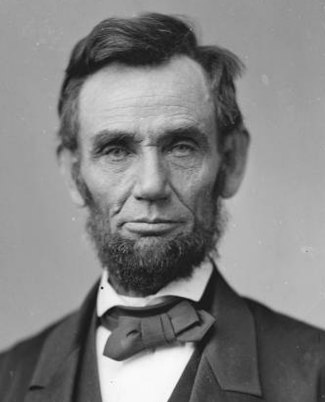
President Lincoln (Photo Credit: National Park Service)
Fellow-Countrymen:
At this second appearing to take the oath of the Presidential office there is less occasion for an extended address than there was at the first. Then a statement somewhat in detail of a course to be pursued seemed fitting and proper. Now, at the expiration of four years, during which public declarations have been constantly called forth on every point and phase of the great contest which still absorbs the attention and engrosses the energies of the nation, little that is new could be presented. The progress of our arms, upon which all else chiefly depends, is as well known to the public as to myself, and it is, I trust, reasonably satisfactory and encouraging to all. With high hope for the future, no prediction in regard to it is ventured.
On the occasion corresponding to this four years ago all thoughts were anxiously directed to an impending civil war. All dreaded it, all sought to avert it. While the inaugural address was being delivered from this place, devoted altogether to saving the Union without war, urgent agents were in the city seeking to destroy it without war—seeking to dissolve the Union and divide effects by negotiation. Both parties deprecated war, but one of them would make war rather than let the nation survive, and the other would accept war rather than let it perish, and the war came.
One-eighth of the whole population were colored slaves, not distributed generally over the Union, but localized in the southern part of it. These slaves constituted a peculiar and powerful interest. All knew that this interest was somehow the cause of the war. To strengthen, perpetuate, and extend this interest was the object for which the insurgents would rend the Union even by war, while the Government claimed no right to do more than to restrict the territorial enlargement of it. Neither party expected for the war the magnitude or the duration which it has already attained. Neither anticipated that the cause of the conflict might cease with or even before the conflict itself should cease. Each looked for an easier triumph, and a result less fundamental and astounding. Both read the same Bible and pray to the same God, and each invokes His aid against the other. It may seem strange that any men should dare to ask a just God’s assistance in wringing their bread from the sweat of other men’s faces, but let us judge not, that we be not judged. The prayers of both could not be answered. That of neither has been answered fully. The Almighty has His own purposes. “Woe unto the world because of offenses; for it must needs be that offenses come, but woe to that man by whom the offense cometh.” If we shall suppose that American slavery is one of those offenses which, in the providence of God, must needs come, but which, having continued through His appointed time, He now wills to remove, and that He gives to both North and South this terrible war as the woe due to those by whom the offense came, shall we discern therein any departure from those divine attributes which the believers in a living God always ascribe to Him? Fondly do we hope, fervently do we pray, that this mighty scourge of war may speedily pass away. Yet, if God wills that it continue until all the wealth piled by the bondsman’s two hundred and fifty years of unrequited toil shall be sunk, and until every drop of blood drawn with the lash shall be paid by another drawn with the sword, as was said three thousand years ago, so still it must be said “the judgments of the Lord are true and righteous altogether.”
With malice toward none, with charity for all, with firmness in the right as God gives us to see the right, let us strive on to finish the work we are in, to bind up the nation’s wounds, to care for him who shall have borne the battle and for his widow and his orphan, to do all which may achieve and cherish a just and lasting peace among ourselves and with all nations.
(Italics mine)
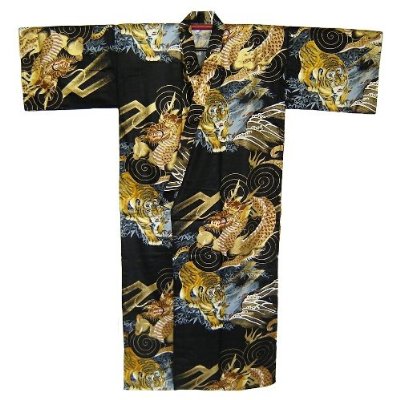
"Lord Atom flicks an anti-quark off his kimono"
Matisse/Picasso
“Good morning, good morning, good morning…” Not!
There’s bad blood between me and the vast apparatus
of Rise and Shine. How can we set our gyroscope
to launch the “Sant Pablo” or plot
a course to Luxe, Calme et Volupté when the sharks are at us
with old news so early? “Tornado Kills 35!” “Hope
Dies for Trapped Poodle!” “Son of Saddam Stole Billions!”
(A garbage truck squeals and clonks. Lord
Atom wipes an anti-quark off his kimono.) Should I
do something? Paint an ogrish odalisque writhing on pillions
of male disgust or, au contraire, a bored
nymph so oversexed she abandons herself to an Eye
as impartial and lecherous as a brush or studio rug?
Meanwhile, dawn leaves a trail of slime on the window like a slug.
*Click on the audio icon below to hear Malcolm Farley read his poem “Matisse/Picasso.”
Bird, Jamaica Bay

Click On Me!
 WordRustler